Where the book appears
Which reader questions and AI services name the book, and how consistently it recurs across repeated answers.

Services / AI discovery (GEO)
We start with one book and the questions its readers ask AI tools. We check whether the answers name it and which titles and sources they use instead, then recommend changes to the book's description and pages.
Books that explain the types of dementia in plain language
Named in 3 of 3
A short starter for the first week after diagnosis
Not named
Portable checklists for day-to-day care at home
Not named
Question lists to take to medical appointments
Not named
Paraphrased from four of the 47 questions in our study of 104 ChatGPT answers. None named the title or author.

Start with what the book helps a reader understand, do, or experience. We agree the questions to test, phrased the way a reader would ask without knowing the title.
Ask each question in the selected AI search services and record the books named and the sources cited. Repeating a question shows how much the answers vary.
Inspect the book's description, publisher pages, and other sources the answers draw on. Separate what the evidence shows from assumptions about why a book appeared.
Your team receives a report with an overview, the supporting answer and source evidence, and ranked recommendations. Proposed copy for the book remains subject to your editorial review.
What the analysis shows
Which reader questions and AI services name the book, and how consistently it recurs across repeated answers.
The competing titles recommended and the sources cited, including relevant publisher and retailer pages, supported by the captured answers.
Prioritized changes to the book's description, pages, and related content, with the evidence and checks behind each one.
An AI answer may cite a publisher's article without naming the book it discusses. It may recommend a competing title, or name a book without giving the reader a useful route to it.
Generative engine optimization (GEO) starts with understanding those differences. We examine the questions readers ask, the books named in the answers, and the sources those answers use.
How books show up in AI searchOur analysis of 27,702 ChatGPT answers found publisher websites in 75.6% of their source lists. Publisher websites were also cited in 41.5% of the 25,136 answers with traceable citations. The study examines the book pages, reading guides, and other sources that connect books with readers’ requests.
Where AI book recommendations come from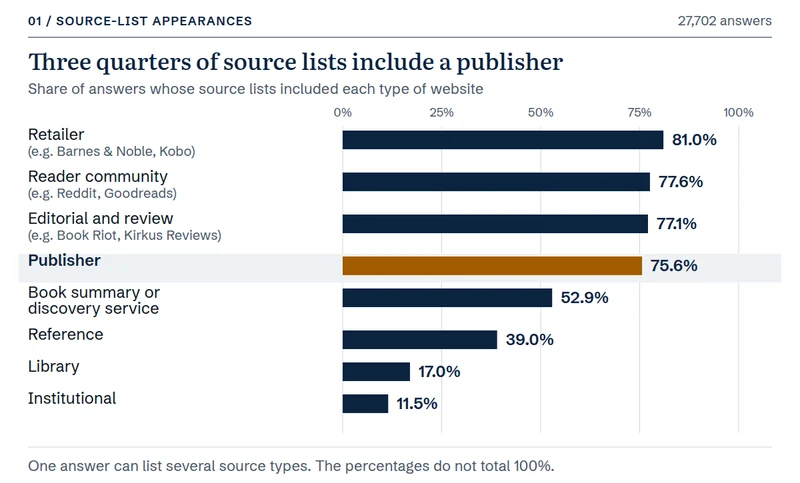
A follow-up study compared what ChatGPT wrote with the publisher pages it cited. Fewer than one cited publisher page in a hundred had an FAQ that matched the answer, so the information on a page mattered more than its question-and-answer format.
Read the publisher FAQ study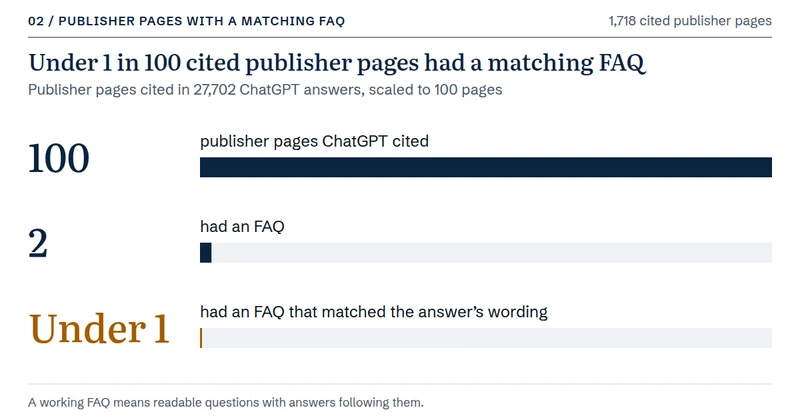
Our public study of The Dementia Caregiver examines how a book's fit with a reader's needs appears in ChatGPT answers. It shows why generic book queries and specific practical questions can produce different recommendations.
A discovery report describes observed answers and opportunities for improvement. It does not guarantee inclusion in future AI answers or establish a sales effect.
Read the reader-needs study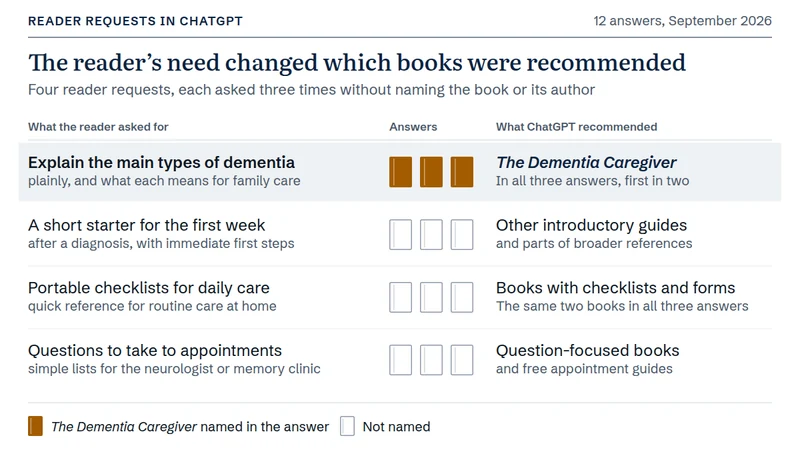
Tell Chris which books you have in mind. We can discuss the reader questions, AI services, and scope most useful to your team.
Send Chris a message